
Flow Coefficient Measurement – Accurate Determination of Cv and Kv Values for Valves, Fittings and Flow Restrictors
As an ISO/IEC 17025 accredited (CNAS) independent laboratory, we provide specialized flow coefficient measurement services for valve manufacturers, fluid power system designers, and industrial end‑users in Algeria. The flow coefficient (Cv in US customary units or Kv in metric units) quantifies the flow capacity of a valve, fitting, or flow restrictor. It is defined as the volume of water (at specified temperature) that passes through the component per unit time at a given pressure drop. Accurate Cv/Kv values are essential for system sizing, pump selection, energy consumption estimation, and control valve characterization. Our laboratory operates a closed‑loop flow test rig with calibrated flow meters, pressure transducers, temperature control, and data acquisition systems to measure flow coefficient across a wide range of component sizes and flow conditions.
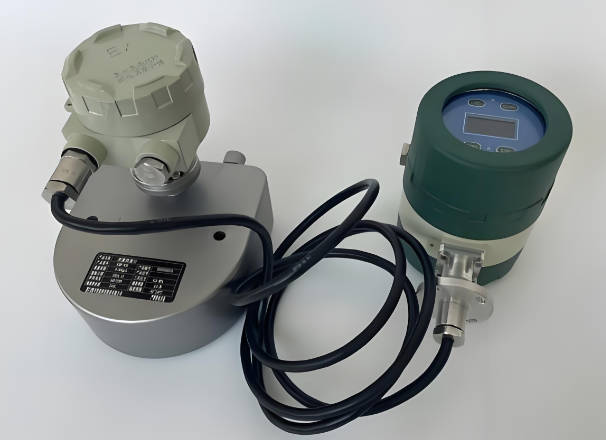
Types of Components We Test for Flow Coefficient
- Manual valves (gate valves, globe valves, ball valves, butterfly valves, plug valves, diaphragm valves)
- Control valves (pneumatic, electric, hydraulic actuated, with various trim types – equal percentage, linear, quick opening)
- Check valves (swing check, lift check, wafer check, spring‑loaded check, silent check)
- Safety and relief valves (pressure relief valves, safety valves, vacuum breakers)
- Solenoid valves (direct acting, pilot operated, normally open, normally closed)
- Flow restrictors and orifices (fixed orifices, calibrated flow restrictors, laminar flow elements)
- Pipe fittings (elbows, tees, reducers, couplings, unions, flanges) – for pressure loss coefficient (K) related to Cv
- Filters and strainers (Y‑strainers, basket strainers, filter elements, coalescing filters)
- Quick‑disconnect couplings, dry break couplings, and industrial hose fittings
- Automotive and aerospace fluid components (fuel injectors, oil jets, cooling nozzles, hydraulic restrictors)
- Medical gas flow control devices (flow meters, gas regulators, patient valves)
- Water treatment and irrigation components (emitters, drippers, sprinklers, pressure compensating devices)
Theoretical Background – Definition of Flow Coefficient
The flow coefficient Cv (US units) is defined as the number of US gallons of water at 60°F (15.6°C) that flow through a component in one minute when a pressure drop of 1 psi (6.9 kPa) is applied across the component. The metric equivalent Kv is the flow rate in cubic meters per hour of water at 15°C with a pressure drop of 1 bar (100 kPa). The relationship between Cv and Kv is approximately: Cv = 1.16 × Kv. For compressible fluids (gases, steam), the flow coefficient is defined with additional correction factors for expansion. In practice, the flow coefficient is determined by measuring flow rate and pressure drop and solving the empirical equation: Cv = Q × √(SG / ΔP), where Q is flow rate (US gpm), SG is specific gravity of the fluid (1.0 for water), and ΔP is pressure drop (psi). For metric units: Kv = Q × √(ρ / ΔP), with Q in m³/h, ρ in kg/m³ (1000 kg/m³ for water), and ΔP in bar.
Test Rig Configuration and Instrumentation
Our flow coefficient measurement system is designed for both water (incompressible) and air (compressible) testing, covering a wide range of component sizes and flow capacities.
- Closed‑loop water flow test rig (for incompressible testing) – A recirculating system consisting of a stainless steel reservoir (capacity 2000 liters), a variable‑speed centrifugal pump (up to 200 m³/h), a heat exchanger for temperature control, and a network of pipes with flanged connections for the test component. Water temperature is maintained at 20°C ± 2°C for standard testing, or at other specified temperatures using a chiller/heater. The system can generate pressure drops up to 10 bar across the test component, with flow rates from 0.1 L/min to 3000 L/min depending on the component size.
- Water flow measurement – We use multiple flow meters in parallel to cover the full flow range: magnetic flow meters (for conductive liquids, accuracy ±0.5% of reading) for medium to high flows, turbine flow meters (accuracy ±0.2% of reading) for clean water applications, and Coriolis mass flow meters (accuracy ±0.1% of reading) for the highest precision. All flow meters are calibrated annually against a gravimetric reference.
- Pressure drop measurement – Differential pressure transducers are connected to pressure taps located upstream and downstream of the test component. The tap spacing and location follow recommended practices (usually 2 pipe diameters upstream and 10 pipe diameters downstream to ensure fully developed flow). Transducers cover ranges from 0–1 kPa to 0–1000 kPa, with accuracy ±0.1% of full scale. For very low pressure drops, we use a micro‑manometer (accuracy ±0.5 Pa).
- Temperature measurement – RTD sensors (Pt100) measure water temperature at the inlet and outlet. Temperature affects viscosity and density, which influence flow coefficient. All reported Cv values are corrected to the reference temperature (60°F / 15.6°C).
- Data acquisition and control – A PC‑based DAQ system (sampling rate 10–100 Hz) records flow rate, upstream pressure, downstream pressure, and temperature. The pump speed is controlled via a variable frequency drive to achieve the desired flow rate or pressure drop. The system automatically performs a series of test points (typically 5–10 points across the flow range) and calculates the average Cv value after checking for consistency.
- Compressed air test rig (for gas flow coefficient) – For components that are used with gases (solenoid valves, pneumatic valves, gas regulators), we have a compressed air system with dry, oil‑free air at controlled inlet pressure (1–10 bar absolute). Flow rate is measured by thermal mass flow meters or laminar flow elements. The test is performed at known inlet pressure and temperature, and the flow coefficient is calculated using the appropriate compressible flow equation, with correction for critical flow conditions if the pressure ratio falls below the critical value.
Test Procedure for Flow Coefficient Measurement (Incompressible Fluid)
The following procedure is applied for water testing of most valves and fittings.
- Component installation – The test component is installed between flanges or threaded connections in the test section. Care is taken to ensure proper alignment and sealing. If the component has a directional arrow, installation follows that direction.
- System filling and deaeration – The loop is filled with deionized water, and air is purged by running water through the system with the test component fully open. Air bubbles trapped in pressure taps are removed by bleeding.
- Temperature stabilization – The water temperature is brought to 20°C ± 2°C and held constant throughout the test by the chiller/heater. For tests at other temperatures (e.g., 40°C, 60°C, or 4°C for cold water applications), the system is stabilized accordingly.
- Preliminary check – With the test component fully open, we record the flow rate at a low pressure drop to verify that the installation is correct and that no leakage occurs at seals.
- Testing at multiple flow points – The pump speed is adjusted to achieve a series of flow rates (or pressure drops) covering the intended operating range of the component. For control valves, we typically test at 10%, 20%, 30%, … 100% of rated stroke, and at each stroke we measure flow rate at 4–6 different pressure drops. For fixed restrictors (orifices, fixed valves), we test at 5–10 flow rates from low to high.
- Data recording – At each test point, the system waits for steady state (flow rate and pressure stable for at least 10 seconds), then records 30 seconds of data and averages the readings.
- Calculation of individual Cv – For each test point, Cv = Q × √(SG / ΔP), where SG for water at test temperature is calculated from the measured temperature (SG = ρ(T) / ρ(15.6°C)). If the test temperature is not exactly 15.6°C, we apply a viscosity correction factor derived from the Moody chart or manufacturer’s data. For laminar flow (very low flow rates, high viscosity fluids), the Cv value may not be constant; we note that condition separately.
- Averaging and repeatability – The Cv values from all test points within the turbulent flow region (Reynolds number > 4000) are averaged. The standard deviation is calculated. If the coefficient of variation exceeds 5% for a fixed‑geometry component, the test is repeated after inspecting for cavitation or installation issues.
- Cavitation check – During testing, we monitor downstream pressure. If cavitation occurs (pressure drops below vapor pressure, audible noise, or unstable flow), the data points affected are excluded because Cv is no longer constant.
Test Procedure for Compressible Fluids (Air, Gas)
- The component is installed in the compressed air line with pressure taps upstream and downstream. Inlet pressure is regulated to a set value (e.g., 2 bar absolute, 5 bar absolute). Upstream temperature is measured.
- Flow rate is measured by a thermal mass flow meter or a laminar flow element. Downstream pressure is varied by a back‑pressure regulator.
- The mass flow rate (kg/s or standard liters per minute) is converted to volumetric flow at standard conditions (usually 20°C, 1 atm). The Cv for gas is calculated using the following equation (for non‑choked flow): Cv = Q_gas × √(SG_gas × T_abs / (ΔP × P2)), where Q_gas is in scfh (standard cubic feet per hour) or other consistent units. For choked flow (when downstream pressure ≤ 0.5× upstream pressure absolute), the equation simplifies to Cv = Q_gas / (P1 × √(1/T_abs)), where P1 is absolute inlet pressure. We test at pressure ratios both above and below the critical pressure ratio to characterize the component fully.
Factors Affecting Flow Coefficient and What We Control
- Reynolds number and flow regime – For low flow rates or small components, the flow may be laminar or transitional, in which case the measured Cv depends on the pressure drop (Cv is not constant). We identify the Reynolds number and report the valid turbulent range separately. For components intended for laminar flow (e.g., flow restrictors in instrumentation), we report the Cv value at a reference ΔP and specify the operating range.
- Fluid temperature and viscosity – Water viscosity decreases with temperature, affecting pressure loss and apparent Cv. All results are corrected to the reference temperature (15.6°C / 60°F). If the customer requests testing at another fluid (oil, fuel, etc.), we adjust the calculation using the specific gravity of that fluid.
- Installation geometry – upstream/downstream piping – The flow coefficient of a component can be affected by the length and diameter of straight pipe before and after the component (disturbed flow). We use standard recommended pipe lengths (typically 10D upstream, 5D downstream) unless the component is intended for compact installations. For components that will be installed close to elbows or reducers in service, we can perform the test with the actual upstream disturbance configuration if specified.
- Cavitation and flashing (for liquids) – When the pressure drop is too high, the local pressure may drop below the vapor pressure, causing vapor bubbles to form (cavitation). This increases noise, damages components, and changes the effective Cv. We record the cavitation onset point and report the maximum allowable ΔP before cavitation.
- Choked flow (for gases) – For gases, when the downstream pressure drops below about 50% of upstream pressure, the flow becomes choked (sonic at the throat) and further reduction in downstream pressure does not increase flow. The flow coefficient in choked conditions is calculated using the inlet pressure only. We report both the choked and non‑choked Cv behavior.
Special Test Configurations
- Multi‑position testing for control valves – For control valves, we measure flow coefficient at several stroke positions (e.g., 10% open, 20%, 30%, … 100%). The results are plotted as Cv vs. stroke percentage. We also measure the inherent flow characteristic (equal percentage, linear, quick opening) by fitting the data to standard curve shapes.
- Testing of multiple components in series (manifolds) – For manifolds or assemblies containing several valves and fittings, we measure the overall flow coefficient of the entire assembly. The individual Cv values are not additive; they combine as: 1/Cv_total² = 1/Cv₁² + 1/Cv₂² + … . We can verify this relationship by testing the assembly and comparing with calculated combined value.
- High‑temperature testing (up to 200°C) – For steam applications and high‑temperature process valves, we have a heated water loop with a pressurized reservoir to prevent boiling. The test is performed at the specified temperature, and the Cv value is corrected to the reference temperature using temperature‑dependent density and viscosity.
- Low‑temperature testing (down to -40°C) – Using a glycol‑water mixture and a chiller, we test valves intended for cold climates or cryogenic service. The fluid properties (density, viscosity) are measured at the test temperature and the reported Cv is corrected to the reference condition.
Data Analysis and Reporting
- Calculation of average Cv for the turbulent region – For each component, we report the average Cv (or Kv) value for flow rates that give Reynolds numbers > 4000. The standard deviation and the range (minimum–maximum) are provided.
- Flow coefficient curve (Cv vs. pressure drop) – For valves with variable geometry (control valves, ball valves), we report a graph of Cv versus percentage of rated travel, and also a graph of flow rate versus pressure drop at fixed openings.
- Inherent flow characteristic classification – Based on the measured Cv vs. stroke data, we classify the valve characteristic as equal percentage, linear, or quick opening. The classification helps control system engineers select the correct valve for stable loop performance.
- Uncertainty statement – The expanded uncertainty (k=2, 95% confidence) of the reported Cv is calculated from the uncertainties of flow meter (±0.2–0.5%), pressure transducer (±0.1%), temperature sensor (±0.2°C), and dimensional tolerances. Typical expanded uncertainties: for water testing ±3% to ±6% of reading; for gas testing ±5% to ±10% of reading.
- Raw data provided – Upon request, we provide the raw data files (flow rate, ΔP, temperature, calculated Cv for each test point) in CSV format. Calibration certificates for flow meters and pressure transducers are also available.
Practical Recommendations for Engineers
- When selecting a valve, choose a Cv such that the valve operates at 30–70% of rated travel at normal flow. Oversizing (Cv too large) leads to poor control; undersizing (Cv too small) leads to excessive pressure drop.
- For liquids, always check the cavitation condition. If ΔP exceeds the allowable pressure drop for cavitation, consider using a multi‑stage trim or a larger valve.
- For gases, verify whether the flow is choked. If choked, increasing upstream pressure is the only way to increase flow; reducing downstream pressure will have no effect.
- Flow coefficients from different laboratories may not be directly comparable if the test fluid temperature, upstream straight pipe lengths, or pressure tap locations differ. Request full test conditions to make valid comparisons.
- For safety valves and relief valves, the certified Cv (or certified discharge coefficient) should be used for sizing, not the factory‑tested Cv without safety margin.
Reporting and Deliverables
Each flow coefficient measurement report includes the following information:
- Component identification (type, size, model number, serial number, trim description, orientation)
- Test fluid (water, air, other – with purity and temperature)
- Test rig description (pipe diameters, upstream/downstream straight lengths, instrumentation used)
- Test conditions: flow rate range, pressure drop range, temperature (actual and reference), number of test points
- Results: average Cv (or Kv) for the turbulent region; for control valves – Cv vs. stroke table and graph; for safety valves – certified discharge coefficient
- Uncertainty statement (expanded uncertainty, k=2)
- Any observations (cavitation onset, choked flow conditions, unusual noise or vibration)
- Comparison with manufacturer’s published Cv (if requested and if sample is known to be representative)
- Raw data files and calibration certificates are archived for a minimum of 10 years
No statement of compliance with any external standard or regulation is made unless the client has provided specific acceptance criteria in writing. The report reflects the test results on the submitted component under the specified conditions.
Why Choose ZKGX?
- State-of-the-art analytical equipment
- Highly qualified scientific team
- Fast turnaround time
- Competitive pricing