
Penetration Test – Evaluating Material Resistance to Puncture, Perforation and Impact Penetration
As an ISO/IEC 17025 accredited (CNAS) independent laboratory, we provide specialized penetration testing services for manufacturers, quality assurance teams, and research institutions in Algeria. Penetration testing measures the ability of a material to resist the passage of a sharp or blunt object under static or dynamic loading. This property is critical for protective packaging, geotextiles, medical gloves, protective clothing (bulletproof vests, cut‑resistant sleeves), roofing membranes, flexible hoses, and food packaging films. Our laboratory performs both quasi‑static penetration (slow puncture) and dynamic penetration (drop dart, falling weight, or projectile) tests on a wide range of materials including plastics, films, composites, textiles, rubber, paper, and metal sheets. Results are reported with failure mode analysis (ductile tearing, brittle fracture, delamination, or plug formation).
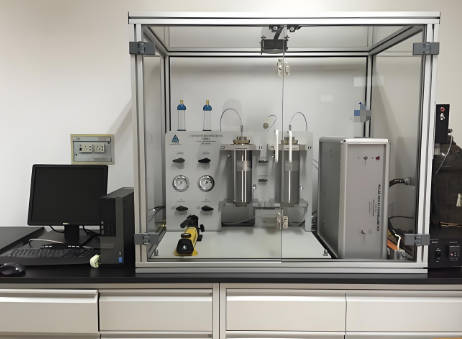
Types of Samples We Test for Penetration Resistance
- Plastic films (polyethylene, polypropylene, PET, PVC, biodegradable films, shrink wrap, stretch film)
- Flexible packaging laminates (multi‑layer films for food, pharmaceutical, and industrial packaging)
- Geotextiles and geosynthetics (woven, non‑woven, knitted fabrics used in civil engineering)
- Medical barrier materials (surgical gloves, examination gloves, protective drapes, gowns, face masks)
- Protective clothing (cut‑resistant sleeves, puncture‑resistant gloves, bulletproof vest panels, stab‑resistant inserts)
- Roofing and waterproofing membranes (bituminous membranes, PVC, TPO, EPDM, liquid‑applied coatings)
- Flexible hoses and tubing (rubber, silicone, PVC, braided reinforced hoses for automotive and industrial use)
- Paper and paperboard (corrugated board, carton board, Kraft paper for packaging)
- Metal sheets (aluminum, steel, copper, tinplate for can ends, closures, and thin‑gauge stampings)
- Composites (carbon fiber, glass fiber, aramid fiber panels used in aerospace and automotive armor)
- Leather and synthetic leather (upholstery, footwear, belts, automotive interiors)
- Foams and cushioning materials (polyurethane foam, polyethylene foam, expanded polypropylene)
Quasi‑Static Penetration Test (Slow Puncture)
This test method applies a steadily increasing force at a constant displacement rate until the penetrator passes through the specimen or until a specified load or displacement is reached. It is suitable for characterizing the puncture resistance of flexible materials, films, and soft packaging.
- Test setup – A universal testing machine fitted with a penetration fixture. The specimen is clamped between two annular rings (upper and lower) to prevent edge tearing. A penetrator (hemispherical, conical, or pointed with a defined tip radius and diameter) is attached to the moving crosshead. Common penetrator geometries: hemispherical tip (diameter 3 mm, 5 mm, 10 mm, or 20 mm), conical tip (30°, 45°, 60° included angle), or flat punch (for shear punch testing).
- Test procedure – The penetrator is driven into the specimen at a constant crosshead speed (typically 50 mm/min, 100 mm/min, or 200 mm/min, depending on material flexibility). The load and displacement are continuously recorded. The test continues until the penetrator completely passes through the specimen (perforation), until the load drops by a specified percentage (e.g., 50% of peak load), or until a preset displacement limit is reached. For films that stretch significantly before puncture, we record the puncture elongation (displacement at peak load).
- Calculated parameters – Peak puncture force (N) – the maximum load before failure. Puncture energy (J) – the total work done from start to peak load, calculated as the area under the load‑displacement curve up to the peak. Puncture displacement (mm) – the crosshead travel at peak force. For some specifications, we also report the force per unit thickness (N/mm) by dividing the peak force by the sample thickness.
- Failure mode observation – Immediately after testing, the pierced hole is examined. For ductile materials (e.g., LDPE film, soft aluminum), the hole shows stretching and necking. For brittle materials (e.g., polystyrene film, hard paper), the hole shows clean cracking or fragmentation. For laminates, we check for delamination around the puncture site and separation of layers. For coated fabrics, we note if the coating peels away from the substrate.
Dynamic Penetration Test (Impact Puncture / Drop Dart)
This method simulates real‑world scenarios where a sharp or blunt object strikes the material at high velocity, such as a falling tool onto a protective cover, a rock hitting a geotextile, or a pointed object piercing a glove during handling.
- Drop dart (falling weight) penetration – A guided weight (mass typically 0.5 kg to 5 kg) with an interchangeable penetrator tip is dropped from a controlled height onto the clamped specimen. The drop height is adjusted to achieve the desired impact energy (E = mgh). The dart may be instrumented with a piezoelectric load cell to record force‑time history, or a non‑instrumented method uses a series of specimens to determine the critical energy for 50% failure (staircase method). After impact, the specimen is examined for perforation, cracking, or visible damage.
- Instrumented falling weight impact test – High‑speed data acquisition (20 kHz to 100 kHz) records force versus time. From the force‑time curve we derive: maximum impact force (N), time to maximum force (ms), total impact duration (ms), energy at maximum force (J), total absorbed energy (J), and rebound energy (J). The impact velocity (m/s) is calculated from drop height. This instrumented method is preferred for quality control of protective packaging and for material development.
- Projectile penetration test (for protective clothing and armor) – A projectile (e.g., a standardized nail, spike, or pointed metal rod) is fired from a pneumatic or spring‑powered launcher at a specified velocity (e.g., 10 m/s, 30 m/s, 50 m/s) toward the specimen. The specimen is mounted on a backing material (e.g., clay, foam, or gel simulant for body armor). The residual velocity (if the projectile passes through) or the depth of indentation into the backing (if stopped) is measured. The limit velocity (V₅₀ – velocity at which 50% of projectiles are stopped) is determined by testing multiple specimens at varying velocities.
- High‑speed video recording (optional) – For dynamic penetration tests, a high‑speed camera (10,000 to 100,000 fps) captures the deformation and failure process. This is particularly valuable for understanding crack initiation, delamination propagation, and the formation of petal‑shaped holes.
Specialized Penetration Tests for Specific Applications
- Geotextile puncture resistance (CBR puncture test) – A cylindrical plunger (diameter 50 mm) with a flat end is pushed into a geotextile specimen clamped in a ring. The test is performed on a universal testing machine at constant crosshead speed (50 mm/min). The peak force (N) is recorded. This test simulates the penetration of coarse gravel or sharp stones into geotextiles used in road construction and erosion control.
- Puncture resistance of medical gloves (surgical and examination gloves) – A pointed probe (diameter 1.0 mm or 1.5 mm, with a defined tip profile) is driven into the glove material at a constant speed (e.g., 100 mm/min). The force at puncture is recorded. Medical gloves must meet minimum puncture force requirements (e.g., 5 N for examination gloves, 10 N for surgical gloves depending on material). We also test after accelerated aging (heat, humidity) to simulate shelf‑life degradation.
- Puncture resistance of flexible hose and tubing – A steel needle (defined diameter and tip angle) is pressed into the hose wall at a constant rate while the hose is internally pressurized (e.g., 0.5 bar, 1.0 bar). The test evaluates the hose’s resistance to external sharp objects in service. Failure is recorded when the needle penetrates the inner wall causing leakage.
- Puncture of paper and corrugated board (for packaging integrity) – A pointed or rounded probe penetrates the board. The peak force and penetration depth are recorded. This test correlates with the ability of a carton to resist sharp edges of contents during vibration or compression.
- Puncture of can ends and metal closures – A hemispherical or flat punch is forced through the metal sheet. The test simulates the force required to open a can or the resistance against accidental perforation during stacking. We report the peak force and the shape of the punched hole (clean plug, torn edge, or cracking).
- Puncture resistance of protective gloves (mechanical hazard) – For gloves used in construction, glass handling, metal stamping, and waste collection, a standardized spike (diameter 2.5 mm with 60° conical point) is driven into the glove material at constant speed. The maximum force before the spike passes through is recorded. Results are classified into performance levels (e.g., Level 1 to Level 5).
Sample Conditioning and Environmental Effects
- Temperature conditioning – Some materials become brittle at low temperatures (e.g., PVC films, polypropylene). We test specimens after equilibration at -20°C, 0°C, 23°C, 40°C, 60°C, or 80°C using a temperature‑controlled chamber integrated with the testing machine or by conditioning in an oven or freezer before immediate testing.
- Humidity conditioning – Hygroscopic materials (paper, nylon, polyamide films, wood‑based composites) absorb moisture, which plasticizes them and changes puncture resistance. We condition specimens at relative humidity levels of 30%, 50%, 80%, and 95% RH for at least 48 hours before testing.
- Aging and weathering preconditioning – For outdoor applications (geotextiles, roofing membranes, protective covers), we expose specimens to UV radiation (xenon arc or fluorescent UV) for 500, 1000, or 2000 hours, or to thermal aging (70°C for 7 days) before performing penetration tests. The reduction in puncture resistance after aging is reported as a percentage retained.
Interpretation of Penetration Test Results
The raw data from penetration tests is only meaningful when interpreted in the context of the intended application. Our laboratory provides the following analytical support.
- Puncture energy vs. thickness relationship – For film materials, puncture energy typically increases linearly with thickness. If a thicker film gives disproportionately lower puncture energy, this may indicate poor material quality (gross defects, poor mixing, contamination).
- Failure mode classification – We classify failure into six categories: (1) ductile tear – a smooth hole with stretched edges; (2) brittle crack – jagged, irregular crack with little deformation; (3) plug formation – a disk of material is cleanly punched out (common in thin metal sheets and rigid plastics); (4) delamination – separation between layers of laminates or coated fabrics; (5) tensile rupture without penetration – the specimen tears from the clamp before the penetrator goes through; (6) cracking radial – star‑shaped cracks emanating from the puncture point (typical for glass and brittle polymers).
- Comparison with reference (client‑provided control sample) – When a client supplies a reference material (e.g., a previously approved product or a competitor’s sample), we perform side‑by‑side testing and calculate the percentage difference in peak force and puncture energy. Statistical significance is evaluated using t‑tests (p < 0.05).
- Effect of penetrator geometry – A sharper tip (smaller radius, lower included angle) produces lower peak forces for the same material because the stress concentration is higher. When comparing results across different tests, always ensure the penetrator geometry is identical. Our reports include detailed drawings of the penetrator used.
Failure Analysis After Penetration Testing
Understanding why a material failed helps manufacturers improve formulation, processing, or design. Our post‑test analysis includes:
- Optical microscopy (magnification 10× to 100×) – Examination of the puncture hole edge for roughness, fibrillation (for textiles), melting (for films tested at high speed), and direction of tear propagation.
- Scanning electron microscopy (SEM) of fracture surface (for detailed mechanism analysis) – At magnifications 500× to 5000×, we observe ductile microvoid coalescence, brittle cleavage facets, or interfacial debonding between fibers and matrix (for composites). This is particularly useful for identifying the cause of unexpectedly low puncture resistance (e.g., voids, foreign inclusions, poor interlayer adhesion).
- Cross‑sectional examination of the puncture site – The specimen is cut through the hole, embedded in resin, polished, and examined. We measure the extent of microcracking beyond the visible hole, the thickness reduction due to stretching, and any delamination between layers (for laminates and coated fabrics).
Reporting and Deliverables
Each penetration test report includes the following information:
- Sample identification (material type, thickness, orientation, conditioning history, batch number)
- Test method (quasi‑static or dynamic, penetrator geometry, clamping condition, test speed or drop height)
- Environmental conditions during test (temperature and humidity)
- Individual test results: peak force (N), puncture energy (J), displacement at peak (mm), and any additional parameters (e.g., force per unit thickness, V₅₀ velocity)
- Statistics: average, standard deviation, coefficient of variation (%) for a minimum of 5 replicates
- Failure mode description and representative photographs (puncture hole, crack pattern, delamination)
- Load‑displacement curve (for quasi‑static) or force‑time curve and energy plot (for dynamic) – available upon request
- Comparison with client‑supplied acceptance criteria (if provided) – pass/fail conclusion
- Raw data files, calibration records of testing machines and instrumentation, and high‑speed video files (if recorded) are archived for a minimum of 10 years
No statement of compliance with any external standard or regulation is made unless the client has provided specific acceptance criteria in writing. The report reflects the test results obtained on the submitted samples and is intended for engineering and quality control use.
Why Choose ZKGX?
- State-of-the-art analytical equipment
- Highly qualified scientific team
- Fast turnaround time
- Competitive pricing