
Recycled Content Verification – Analytical Testing for Circular Economy Claims and Green Procurement
As an ISO/IEC 17025 accredited (CNAS) independent laboratory, we provide specialized recycled content verification services for manufacturers, suppliers, and regulatory bodies in Algeria. With increasing global emphasis on circular economy principles and sustainability claims, accurate determination of recycled material content in products has become essential for green procurement, ecolabel certifications, and compliance with import requirements (e.g., EU Packaging and Packaging Waste Directive, US Federal Trade Commission Green Guides, and various national regulations). Our laboratory employs a combination of physical separation, thermal analysis, spectroscopic methods, and dissolution techniques to quantify post-consumer and post-industrial recycled content in plastics, paper, metals, glass, rubber, and composite materials. Results are reported with measurement uncertainty and are suitable for supporting environmental claims in commercial and regulatory contexts.
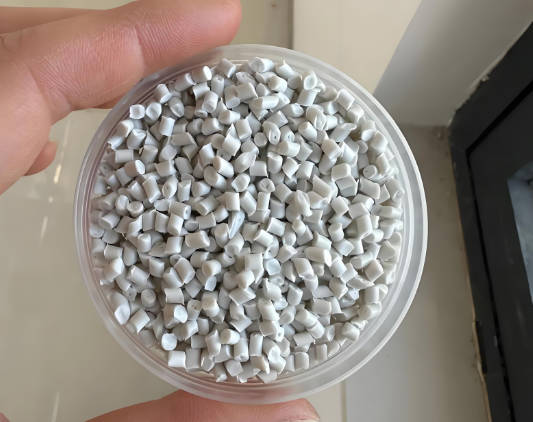
Product and Material Types We Test for Recycled Content
- Plastic packaging (bottles, containers, films, bags, trays, closures) made from PET, HDPE, PVC, LDPE, PP, PS, and other polymers
- Paper and paperboard products (corrugated boxes, cartons, office paper, tissue, newsprint, molded pulp packaging)
- Metal products (aluminum cans, steel packaging, metal building materials, automotive scrap-based components)
- Glass containers (bottles, jars) and glass fiber insulation
- Rubber products (tires, conveyor belts, seals, flooring, mats) containing recycled rubber powder or crumb rubber
- Composites and mixed materials (wood-plastic composites, multilayer laminates, fiber-reinforced plastics with recycled content)
- Textiles and nonwovens (recycled polyester from PET bottles, recycled cotton, nylon, wool)
- Construction materials (recycled aggregate concrete, gypsum board with reclaimed gypsum, insulation containing recycled glass or plastic)
- Automotive components (bumpers, interior trim, under‑hood parts) containing recycled polymers
- Consumer electronics housings (recycled ABS, PC/ABS, recycled metals from e‑waste)
Sample Preparation for Recycled Content Analysis
Proper sample preparation is critical for accurate recycled content determination. The following procedures are adapted to the material type and the analysis method to be employed.
- Homogenization and size reduction – For plastics, metals, glass, and composites, the sample is cryogenically or mechanically ground to pass through a 500 µm sieve, ensuring a representative portion for analysis. For paper products, the sample is shredded and then pulped in deionized water with mild agitation. For rubber, cryogenic milling is preferred to avoid thermal degradation. For textiles, samples are cut into small pieces (approximately 5 mm × 5 mm) and then homogenized by mixing.
- Removal of surface contaminants – Samples are cleaned with appropriate solvents (e.g., ethanol, acetone, deionized water) to remove labels, adhesives, inks, coatings, and dirt that could interfere with analysis. Cleaning is performed in an ultrasonic bath for 5–15 minutes, followed by rinsing and drying at low temperature (≤ 50°C) to avoid altering the material.
- Drying and moisture content determination – All samples are dried to constant mass in a ventilated oven at a temperature appropriate for the material (e.g., 105°C for plastics and paper, 60°C for rubber and some textiles). The moisture content is recorded and used to correct final results to dry mass basis.
- Preparation of reference materials – For comparison, virgin reference materials of the same generic type (e.g., virgin PET pellets, virgin paper pulp) and known recycled materials (e.g., certified post‑consumer recycled flakes) are prepared in the same manner as the test samples.
Analytical Methods for Recycled Content Quantification
Different analytical techniques are applied depending on the material type and the nature of the recycled content (post‑consumer vs. post‑industrial, presence of additives, degradation products, or tracer compounds).
- Thermal analysis – Differential scanning calorimetry (DSC) for plastics – Recycled polymers typically exhibit altered thermal behavior due to thermal and oxidative degradation during previous processing. Changes in melting temperature (Tm), crystallization temperature (Tc), glass transition temperature (Tg), and enthalpy of fusion (ΔHm) can indicate the presence of recycled content when compared to virgin reference. A calibration curve is prepared using blends of virgin and known recycled material at various ratios (0%, 10%, 20%, 30%, 50%, 75%, 100%). The recycled content of an unknown sample is interpolated from the measured Tm shift or ΔHm reduction. This method works best for single‑polymer systems without heavy fillers. Typical precision is ±5% absolute recycled content.
- Thermogravimetric analysis (TGA) with evolved gas analysis (EGA) by FTIR or MS – Recycled materials often contain decomposition products from previous lifetimes (e.g., low molecular weight oligomers, oxidation products, residual solvents). The TGA curve of a recycled material may show earlier onset of decomposition and different weight loss steps. Coupled EGA identifies specific compounds (e.g., aldehydes, carboxylic acids) that are markers of degradation. The method can be used semi‑quantitatively by comparing the magnitude of characteristic signals against a calibration series.
- Fourier transform infrared spectroscopy (FTIR) – Attenuated total reflectance (ATR) or transmission mode – Recycled plastics frequently show carbonyl peaks (1710–1740 cm⁻¹) due to oxidation, and sometimes the presence of contaminants (e.g., polyamide in recycled PET, polyolefin in recycled PS). The ratio of the carbonyl peak area to a reference peak (e.g., C‑H stretch at 2950 cm⁻¹) is calculated. This “carbonyl index” correlates with the extent of degradation and, when calibrated, can estimate recycled content. For paper and textiles, FTIR can detect the presence of recycled fibers by identifying characteristic additives (e.g., optical brighteners, sizing agents) or morphological changes in fiber spectra.
- Dissolution and gravimetric separation (for multi‑layer or filled materials) – The sample is dissolved in a selective solvent (e.g., hexafluoroisopropanol for PET, decalin for polyolefins, formic acid for polyamide). The insoluble fraction (fillers, pigments, cross‑linked particles, or non‑dissolved polymer types) is filtered, dried, and weighed. The soluble polymer fraction is precipitated, filtered, and weighed. Comparison of the soluble polymer’s molecular weight distribution (by GPC) and the nature of insolubles can indicate the presence of recycled material (e.g., higher filler content, broader molecular weight distribution). This method provides quantitative data on the polymer fraction that is extractable and, when combined with other techniques, supports recycled content claims.
- Dissolution and density separation for paper (fiber analysis) – The paper sample is disintegrated in water to form a pulp. A known mass of pulp is dispersed in a density gradient medium (e.g., a mixture of water and ethanol or a heavy liquid). Virgin fibers and recycled fibers often have different densities due to hydration, fines content, and the presence of inorganic fillers. Alternatively, the pulp is screened through a series of sieves (e.g., 100 mesh, 200 mesh) to separate long fibers from fines. The mass fraction of fines, which is typically higher in recycled paper, can be correlated to recycled content through calibration with reference blends. Fiber length distribution analysis by automated fiber quality analyzers provides additional discrimination. This method is widely used in the paper industry to estimate post‑consumer recycled fiber content.
- Selective dissolution and marker compound analysis (for plastics with trace additives) – Some recycled content verification methods rely on the detection of “tracer” compounds that are present in recycled streams but absent or very low in virgin materials. These may include specific antioxidants (e.g., Irganox 1010 degradation products), slip agents (e.g., erucamide), or UV stabilizers that accumulate after multiple processing cycles. The sample is extracted with a suitable solvent (e.g., hot toluene for polyolefins, dichloromethane for PET), and the extract is analyzed by gas chromatography‑mass spectrometry (GC‑MS) or liquid chromatography‑mass spectrometry (LC‑MS/MS). The concentration of selected marker compounds is compared to a calibration curve constructed from blends with known recycled content. This method can achieve high sensitivity (detection of 1–5% recycled content) and is applicable to many polymer types.
- Metals – Elemental analysis of alloying elements and trace impurities – For recycled metals (e.g., aluminum, steel, copper alloys), the concentration of certain tramp elements (e.g., copper in steel, zinc in aluminum, lead in brass) is often higher in recycled material compared to primary metal produced from ore. The sample is dissolved in acid and analyzed by inductively coupled plasma optical emission spectrometry (ICP‑OES) or ICP‑mass spectrometry (ICP‑MS). The concentrations of key elements are compared to a reference database of virgin and recycled grades. In some cases, the recycled content can be estimated using a linear mixing model if the compositions of the virgin base and the scrap mix are known. Typical precision is ±2–5% absolute for major elements.
- Glass – Density and inclusion analysis – Recycled glass (cullet) often contains small inclusions of ceramics, stones, and metals that are not present in virgin glass. The sample is crushed and sieved, and the heavy fraction is separated by density (e.g., using a dense liquid of specific gravity 2.5–2.8). The mass of the heavy residue is weighed. The presence of refractory inclusions can also be detected by polarized light microscopy or scanning electron microscopy with energy‑dispersive X‑ray spectroscopy (SEM‑EDS). A calibration curve relating the mass of residue to recycled content can be established for known cullet sources. Additionally, the color distribution of glass particles (e.g., flint, amber, green) can provide an estimate of recycled content when the target product is clear (flint) glass.
- Rubber – Extraction of soluble fraction and carbon black analysis – Recycled rubber powder often contains a higher percentage of soluble extractables (oils, processing aids, low molecular weight polymers) and a different distribution of carbon black. The sample is extracted with a solvent (e.g., toluene or acetone) in a Soxhlet apparatus for 6–12 hours. The extract is dried and weighed. The extracted residue is then pyrolyzed in an inert atmosphere to determine carbon black content and ash. The ratio of extractables to total mass, and the carbon black/ash ratio, can be compared to virgin rubber and to recycled reference blends.
Calibration, Standards, and Quality Assurance
- Preparation of reference blends – For each material type and analytical method, we prepare a series of calibration standards by blending certified virgin material with certified recycled material (post‑consumer or post‑industrial, with known provenance) at precisely weighed ratios (e.g., 0%, 10%, 20%, 30%, 50%, 75%, 100% recycled content). These blends are processed (ground, mixed, or milled) in the same manner as test samples to ensure matrix‑matched calibration.
- Certified reference materials (CRMs) – When available, we use CRMs for specific materials (e.g., recycled PET flakes certified for a certain percentage of recycled content, or paper pulps with known recycled fiber content). These are analyzed periodically to verify the accuracy of the calibration.
- Blank and control samples – Each analytical batch includes a reagent blank (no sample, processed through the entire procedure) and a control sample of virgin material (0% recycled) and a control sample of 100% recycled material of the same type. These must meet acceptance criteria (e.g., blank below detection limit, control recovery within ±5% of nominal) for the batch to be valid.
- Method validation parameters – For each method‑material combination, we validate:
- Linearity of response over the range of interest (R² > 0.99)
- Limit of detection and limit of quantification (typically 1–5% recycled content for most methods)
- Precision (repeatability RSD < 10% at mid‑range levels; reproducibility RSD < 15%)
- Accuracy (recovery of blended controls within ±5% absolute of nominal recycled content)
- Effect of interfering substances (e.g., pigments, fillers, coatings) – evaluated by spiking
- Sample mass and replication – Sufficient sample mass is taken to ensure representativeness (e.g., 5–10 g for plastics, 2–5 g for paper, 1–2 g for metals, 10–20 g for glass). Each test sample is analyzed in duplicate; if the two results differ by more than the method’s repeatability limit, a third analysis is performed and the median is reported.
- Uncertainty of measurement – The combined standard uncertainty (including contributions from sample heterogeneity, calibration, and instrument variation) is calculated for each result and reported as expanded uncertainty (k=2, approximately 95% confidence). Typical expanded uncertainties range from ±2% to ±8% absolute recycled content, depending on the method and matrix.
Reporting and Deliverables
Each recycled content verification report includes the following information:
- Sample identification (product description, material type, source, batch or lot number, claimed recycled content if provided by client)
- Sample preparation procedure (grinding, cleaning, drying, sieving, moisture content, mass taken)
- Analytical method(s) used (e.g., DSC, TGA‑EGA, FTIR, selective dissolution, marker compound analysis by GC‑MS, ICP‑OES, etc.) with key parameters (temperature programs, solvents, calibration range)
- Calibration data (reference materials used, blend ratios, calibration curve equation, R² value)
- Quality control results (blank, virgin control, 100% recycled control, recovery of spiked controls, duplicate agreement)
- Quantitative result: estimated post‑consumer and/or post‑industrial recycled content (percentage by mass, dry basis), with expanded uncertainty (k=2)
- Supporting data: thermograms (DSC, TGA), spectra (FTIR, EGA‑MS), chromatograms (GC‑MS, LC‑MS/MS), or elemental concentrations (ICP‑OES tables) as appropriate
- Comparison with client‑supplied claimed recycled content (if provided) – statement of whether the measured value is consistent with the claim within the measurement uncertainty
- Limitations: any known interferences or conditions that may affect the accuracy (e.g., presence of heavy fillers, coatings, or mixed polymer types that could bias the result)
- Raw data files and calibration records are archived for a minimum of 10 years and are available upon request
No statement of compliance with any specific ecolabel or regulatory requirement is made unless the client has provided the applicable criteria in writing. The report reflects the analytical results on the submitted sample and is intended to support, but not replace, full certification by an accredited ecolabel body where required.
Why Choose ZKGX?
- State-of-the-art analytical equipment
- Highly qualified scientific team
- Fast turnaround time
- Competitive pricing